



Prevent Accidents and Provide Efficient Assistance
Enjoying the mountains safely begins with proper planning, preparation, and prevention.
Knowing your route, assessing your group's abilities, checking the weather, and carrying the right equipment help reduce risks and support responsible decision-making throughout your journey.
The ideal situation is to avoid accidents altogether. However, even a well-organized excursion can be affected by unexpected weather changes, injuries, exhaustion, or navigation difficulties. That is why it is essential to recognize hazards early, adapt your itinerary, and know when to turn back or call for help.
If an emergency occurs, staying calm, communicating what happened, and providing an accurate location can save lives. A prompt alert, accompanied by information about the people affected and the terrain conditions, helps coordinate search, rescue, and evacuation operations.
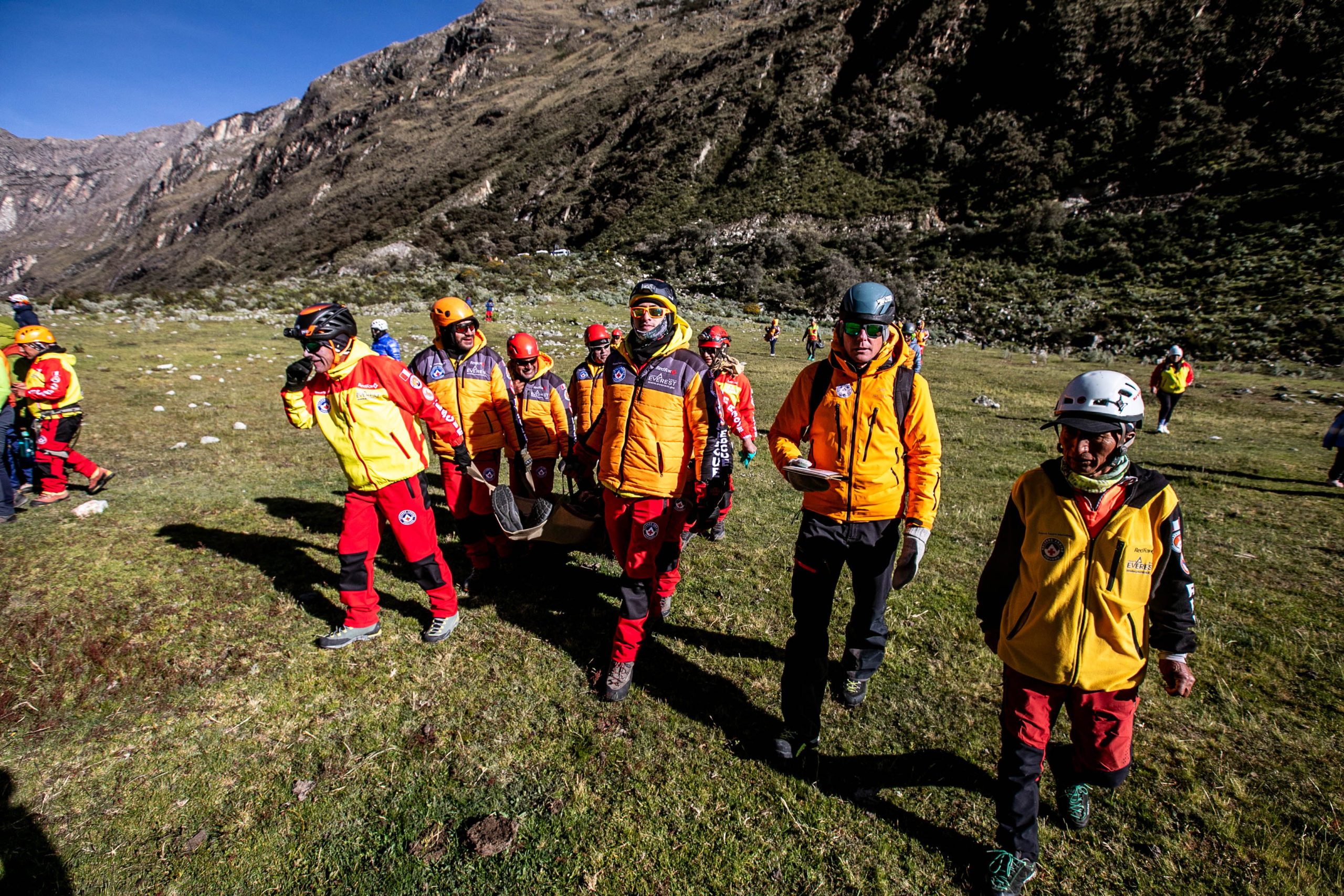
At SAR24 | Search & Rescue 24/7, we promote prevention and emergency preparedness, with a commitment to assisting those who need help in the mountains and in hard-to-reach areas.
Before You Set Out, Share Your Route
Your safety begins before you leave: prepare properly, share your itinerary, and carry suitable communication devices for your journey.
If you are planning to go trekking, mountaineering, or hiking in the mountains, let someone know in advance where you are going, which route you intend to follow, and when you expect to return.
- Include your itinerary, departure and return dates, planned campsites, number of participants, and contact details.
- If you are traveling with an agency or guide, also provide their name and phone number.
This information allows us to know your planned route and provides reference points to help guide a search in the event of an emergency. If you change your itinerary, notify someone whenever possible and confirm your return when you finish.
SAR24's Seven Safety Tips
Click each section to expand the details:
1. Self-Assessment
Honestly assess your abilities, physical fitness, and experience, as well as those of your companions, especially children and people with limited mountain experience. Choose a route that everyone can complete safely, taking the return journey into account as well.
Before setting out, consider the following:
- Physical fitness: Can you walk for several hours, handle elevation changes, and carry your backpack? Consider how you have felt on recent trips of similar difficulty.
- Experience and technical skills: Assess whether you know how to navigate and move safely across the terrain you expect to encounter. Glaciers, snow, steep slopes, and exposed sections require specific training and equipment.
- Actual route difficulty: Check the distance, elevation gain and loss, maximum altitude, terrain type, and estimated time required. Even a short route can be strenuous or dangerous.
- Personal condition: Consider your level of rest, physical discomfort, injuries, and any health conditions that could limit your exertion.
- Acclimatization: Take your adaptation to altitude into account. Good physical fitness does not replace proper acclimatization.
- Group capabilities: Adapt the route and pace to anyone who needs more time or assistance. With children, pay attention to their comfort, energy levels, and willingness to continue.
- Safety margin: Save enough energy, water, food, and time for the return journey. Allow for possible delays and avoid planning a trip that pushes your limits.
Throughout the journey, regularly check how you feel and how your companions are doing. Speak up about any discomfort, and do not let the pressure to reach a summit or complete a route dictate your decisions.
Fatigue, exhaustion, and overexertion increase the risk of accidents. Adjusting your itinerary or turning back in time is a responsible decision.
2. Excursion Planning
Careful planning helps you understand the demands of your route, anticipate difficulties, and make safe decisions. Before setting out, take time to study the route and adapt your itinerary to the experience, physical fitness, and acclimatization level of all participants.
- Route and terrain: Identify the starting point, destination, trail junctions, mountain passes, and campsites. Check whether you will cross steep slopes, exposed areas, rivers, snowfields, or glaciers.
- Distance, elevation gain, and altitude: Check the total distance, cumulative ascents and descents, and maximum altitude.
- Timing and safety margin: Estimate the time needed for the outward and return journeys, including breaks and possible delays. Set a turnaround time.
- Route conditions: Obtain recent information from local guides, area authorities, or campsite managers.
- Weather: Check the forecast and establish which conditions would require you to modify or cancel the excursion.
- Alternative routes and exit points: Identify places where you can shorten the route, turn back, or seek shelter.
- Water, food, and campsites: Locate resupply points and carry sufficient reserves.
- Navigation and communication: Save offline maps and check that satellite communication devices are working properly.
Share your plan with someone you trust. Provide your itinerary, participant details, campsites, expected return date and time, and agree on a procedure to follow if you are delayed.
3. Equipment
Adapt your equipment to the weather, altitude, duration, and difficulty of the route. Carry navigation tools, communication devices, and emergency supplies:
- Map, compass, or Garmin GPS device, with the route available offline.
- Satellite communication device, such as Garmin inReach, for geolocation and SOS alerts.
- Satellite phone or personal locator beacon for remote areas without mobile coverage.
- GPS watch to record your route and check your location.
- Starlink equipment when appropriate for the expedition.
- First-aid kit and an emergency thermal blanket or bivy sack.
- Fully charged mobile phone and power bank.
- Whistle and headlamp with spare batteries.
- Waterproof and warm clothing, even in summer.
- Sufficient water and food.
4. Emergency Response
- Stay calm and assess the surroundings: Before approaching an injured person, identify hazards such as exposed slopes, crevasses, or avalanches.
- Avoid exposing yourself to further accidents: The safety of those providing assistance is essential.
- Provide first aid: Protect the person from cold, wind, and moisture. Avoid moving them unnecessarily.
- Request assistance as soon as possible: Use a phone or satellite communication device.
- Describe the accident and location accurately: Provide GPS coordinates, the route name, altitude, and weather conditions.
- Follow emergency service instructions: Answer questions clearly and confirm instructions.
- Conserve your phone battery: Reduce screen brightness, limit photo and video use, and keep the device warm.
5. Nutrition and Hydration
- Nutritious and practical foods: Nuts, cereal bars, dried fruit, and sandwiches.
- Eat throughout the journey: Use breaks to replenish your energy before you become exhausted.
- Drink water regularly: Keep water accessible and adjust your intake to your level of exertion.
- Plan your water supply: Carry a water treatment system. Water that looks clean is not necessarily safe to drink.
- Emergency food and water reserves: Allow for possible delays or an unexpected extra night outdoors.
6. Weather Forecast
- Check the forecast for the entire excursion: Consider temperature, wind, rain, and visibility on summits and high mountain passes.
- Check local information: Guides and mountain huts can provide information about actual terrain conditions.
- Avalanche information: In snowy terrain, assess whether you have the necessary training to travel safely.
- Watch for changing conditions: Dense clouds, increasing winds, or thunder are reasons to reassess your plans.
- Decide when to turn back: Agree with the group on the conditions that will require you to cancel or change your route.
7. Group Pace and Cohesion
- Adjust the pace to the person who needs to move more slowly.
- Keep the group together and never leave anyone alone at trail junctions or in areas with poor visibility.
- Start at a moderate pace and take regular breaks.
- Encourage everyone to report fatigue, pain, or discomfort promptly.
- Regroup at key points before continuing.
How to Request Emergency Assistance
A mobile phone can be used to report an emergency, but coverage may be limited in the mountains. Save SAR24's contact details before setting out.
What Information Should You Provide?
When reporting an emergency to SAR24, communicate the information calmly and clearly. If you do not know a particular detail, say so and provide whatever information you can confirm.
Where did it happen?
Provide the GPS coordinates, route name, campsite, mountain pass, or mountain name, approximate altitude, and nearby landmarks. If possible, send a location link or a screenshot of the map showing the coordinates.
Describe the weather, visibility, and terrain hazards, such as steep slopes, crevasses, rockfalls, or rivers. Clarify whether you are still at the accident site or have moved elsewhere.
What happened?
Briefly explain the type of accident, when it occurred, and the current situation. State whether it involves a fall, a missing person, an injury, or a medical problem that prevents someone from continuing.
Report what assistance has already been provided and whether the situation is getting worse.
How many people need assistance?
State the number of people affected and the total number of people in the group. Mention whether children are involved, whether anyone is alone, or whether any participants are unable to move without assistance.
Clarify how many people can remain with and assist those who need help.
What injuries or symptoms are present?
Describe what you observe: level of consciousness, difficulty breathing, bleeding, pain, or exposure to cold. State whether the person responds when spoken to and whether they can walk.
You do not need to make a diagnosis. Simply report the symptoms and any changes you notice in the person's condition.
Who is reporting the emergency?
Provide your name and contact number, including the country code. State whether you can receive phone calls, WhatsApp messages, or satellite communications, and indicate how much battery power you have left.
If possible, provide a second contact from the group. Keep your device accessible and report any change in your location.